Event — October 2026
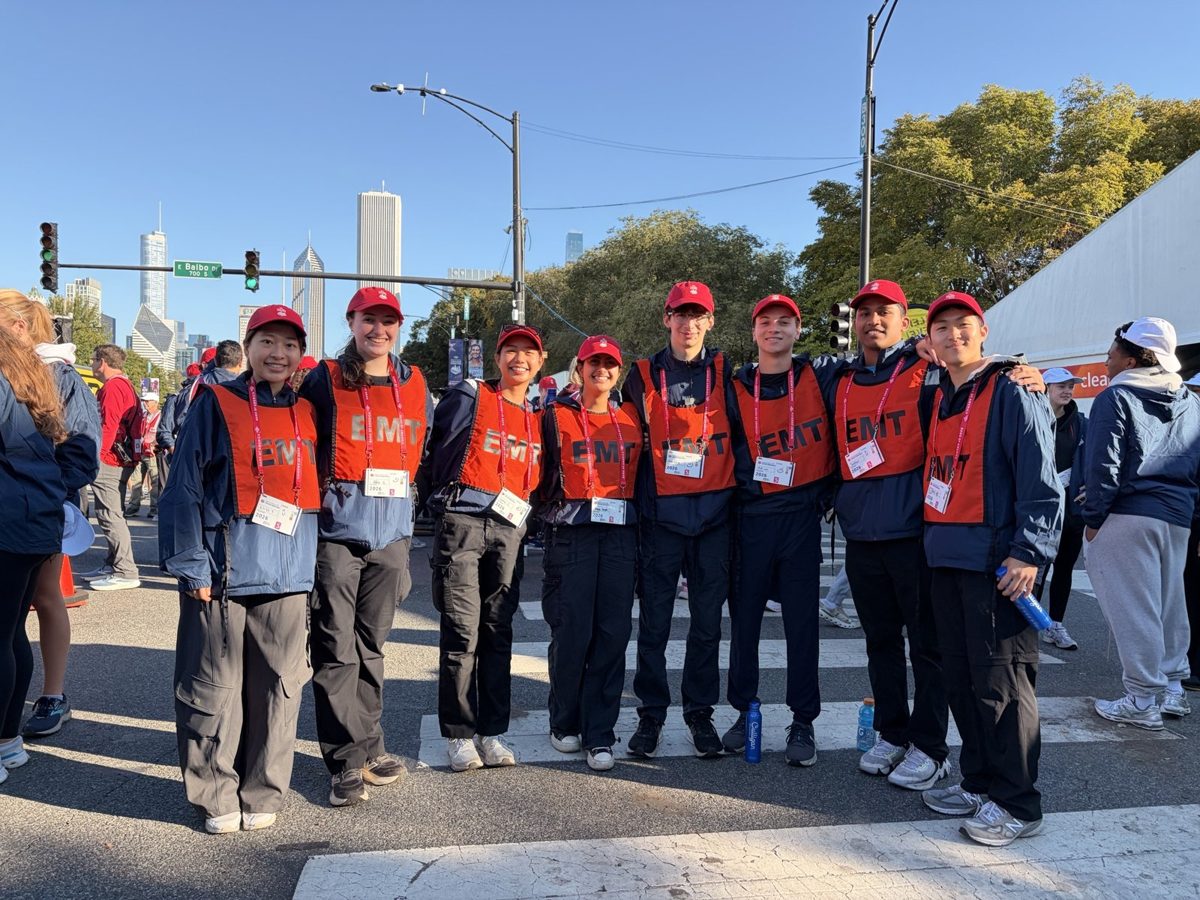
NEMO at the 2026 Chicago Marathon
NEMO EMTs volunteered on the medical team at the 2026 Bank of America Chicago Marathon.
Northwestern's only for students, by students, EMT-Basic certification course. Two quarters long, only $350, and a direct line into emergency medicine.

NEMO's annual EMT-Basic course is the largest student-run pre-clinical training program at Northwestern. We partner with MedEx Ambulance Service — a state-licensed EMS provider — to deliver the same Illinois Department of Public Health (IDPH) approved curriculum that anchors paid commercial programs across the Chicago area.
The course runs across Winter and Spring quarters. Lectures, hands-on skills sessions, simulation labs, and clinical rotations are scheduled around academic loads. By the time students sit for the National Registry of Emergency Medical Technicians (NREMT) cognitive and psychomotor exams in late spring, they've logged the lecture hours, clinical hours, and competency check-offs required for state and national licensure.
For anyone who wants to make an impact in their community, this is one of the cheapest and most accessible routes into meaningful clinical exposure that actually counts on an application.
Private EMT programs in the Chicago area run between $1,800 and $4,400. We've worked extensively with the student government at Northwestern and MedEx to bring that cost to $350. We teach the same IDPH-approved curriculum, with the same NREMT exam at the end which is included in your tuition — because NEMO takes no margin and outside funding offsets infrastructure costs.
Class sessions, skills labs, exams, and events, all in one place. Times are in Central Time. Tap an event for details, or use the buttons below to add a calendar to your own calendar app.
NEMO runs on its mentors. Past NEMO graduates and working EMTs come back each year to help facilitate the course alongside our instructors.
You don't need to have taken NEMO to mentor. If you hold an EMT-B license, you can apply.
Apply to be a mentor
NEMO EMTs volunteered on the medical team at the 2026 Bank of America Chicago Marathon.
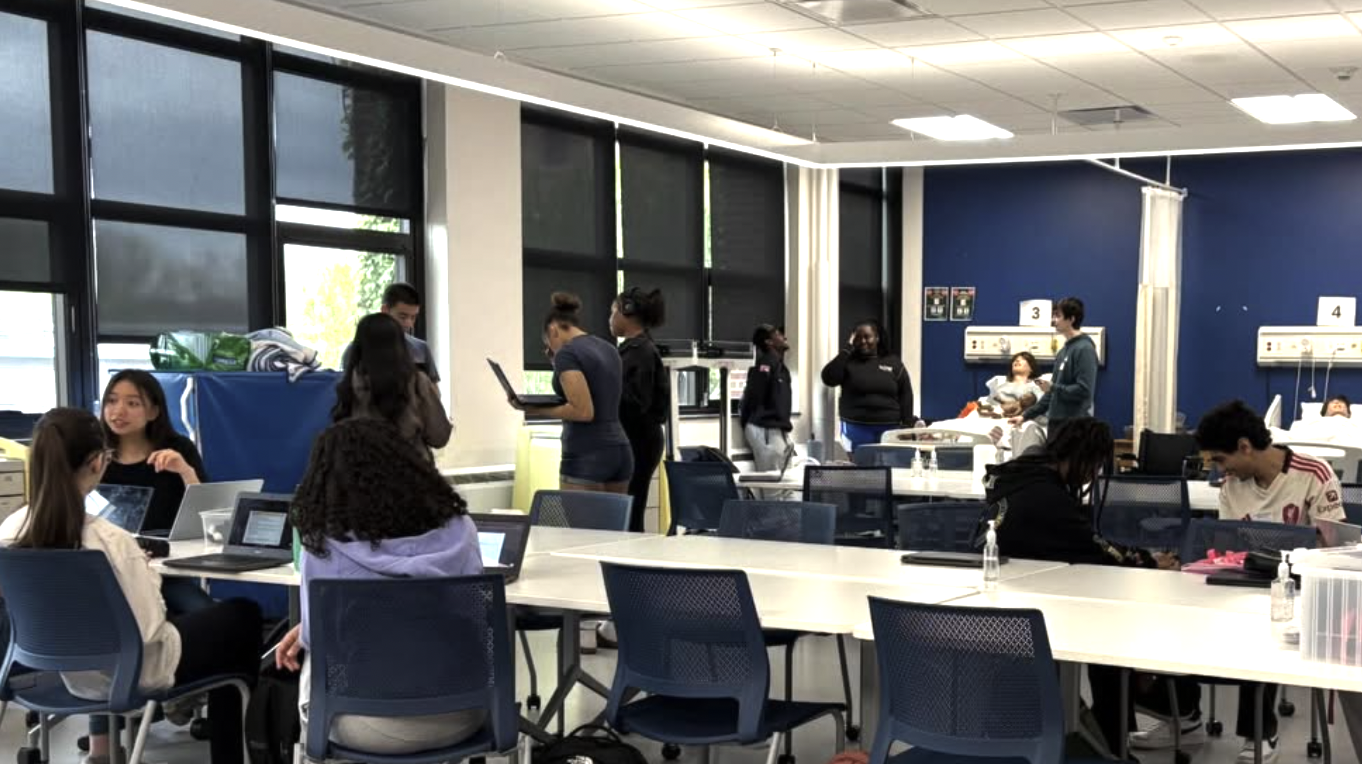
NEMO mentors helped teach emergency response skills to Evanston Township High School students.
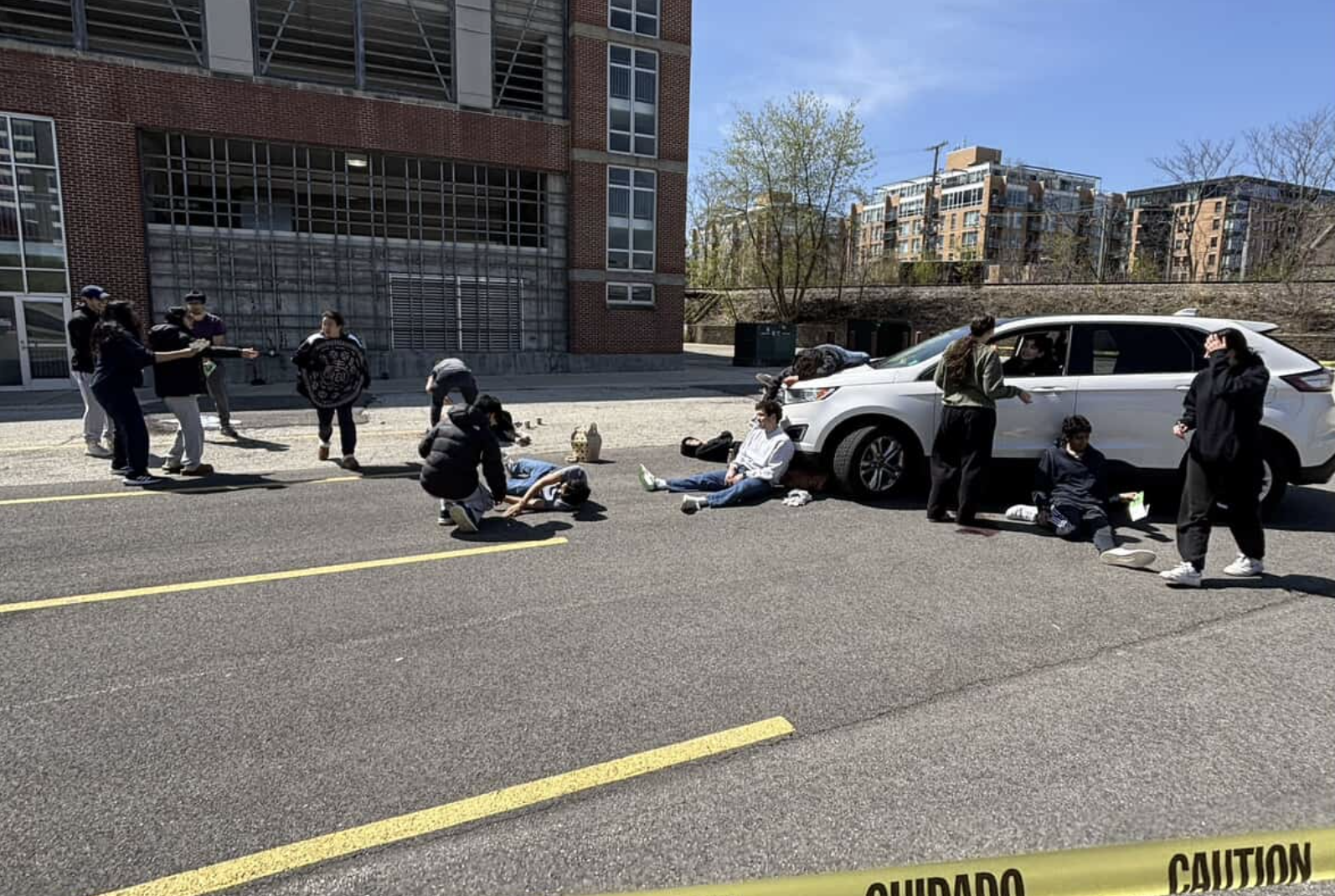
NEMO hosts their annual mass casualty event to prepare students to respond in a real-life emergency.
Watch our mentor meeting to see what mentoring with NEMO involves: helping run skills sessions and labs, coaching students through their psychomotor exams, and earning continuing education hours toward your own EMT license.
Everything you need to know about the course, the application, and what the year looks like, straight from the executive board.
Tuesday lectures on Zoom (6–10 PM), Sunday skills sessions in person (morning group 10 AM–2 PM or afternoon group 2–6 PM), and optional Wednesday skills practice and office hours (8:30–10 PM). Each block builds on the last, from foundations to assessment to medical to trauma to operations, with three written exams, a psychomotor midterm and a psychomotor final spaced across the term. See the full 2027 schedule (PDF).
Orientation, then intro to EMS, well-being, medical-legal issues, terminology, anatomy and pathophysiology (Ch. 1–8). Skills: lifting and moving, stretcher and stair chair, PPE.
Vital signs and monitoring devices, scene size-up, primary and secondary assessment (Ch. 11–15). Skills: BP, pulse ox, blood glucose, lung sounds, SAMPLE and OPQRST.
Airway management, ventilation, reassessment, communication and documentation (Ch. 9–10, 16–17). Skills: suctioning, OPA/NPA, oxygen, BVM, i-gel. Written Exam #1.
Abdominal, hematologic and renal emergencies, bleeding and shock, soft-tissue trauma (Ch. 26, 28–30). Skills: Stop the Bleed, dressings and burns, impaled objects.
Pharmacology, respiratory and cardiac emergencies, resuscitation, infectious disease and sepsis (Ch. 18–21, 24). Skills: team CPR and AED, aspirin and nitro assist, CPAP.
Diabetic emergencies and altered mental status, allergic reactions, overdose, behavioral emergencies (Ch. 22–23, 25, 27). Psychomotor midterm and Written Exam #2.
Two weeks off, March 14–28. No lectures or skills sessions.
Chest, abdominal, musculoskeletal, head, neck and spine, and multisystem trauma (Ch. 31–34). Skills: splinting, traction splint, chest seals, spinal motion restriction.
Environmental and OB/GYN emergencies, patients with special challenges (Ch. 35–37). Skills: delivery and newborn care, KED and extrication. Midterm skills exam.
EMS operations, hazmat and MCIs, highway safety, response to terrorism (Ch. 38–41). Mass casualty drill with JUMP/START triage. Written Exam #3.
Practice final psychomotor with full scenario stations, final review session, NREMT sign-up and licensing after the NREMT.
Final written and skills exams, then three nights of final psychomotor testing. The course ends May 16.















Taking your license out of Illinois. Your Illinois EMT-B license, issued by the Illinois Department of Public Health (IDPH), is only valid in Illinois. To work as an EMT somewhere else, such as your home state over the summer, you apply for that state's license through its EMS office, usually called reciprocity or licensure by endorsement. Your National Registry (NREMT) certification is what makes this straightforward: most states accept an active NREMT certification as the basis for their EMT license, though many add their own application, fee, background check, or protocols exam. Keep your NREMT certification current (it renews every two years) so the option stays open.
Bringing an out-of-state license into Illinois. If you're already an EMT from another state (for example, joining NEMO as a mentor), you need an Illinois license to work as an EMT here; an NREMT card on its own is not a license to practice in Illinois. Apply to IDPH with the EMS reciprocity application, emailed to dph.emtlic@illinois.gov with a copy of your current state license or NREMT card, your current CPR/BLS card, and a letter from your most recent EMS medical director. Submit it at least 60 days before your current license or NREMT certification expires. The current form lists $120 in fees for an EMT. If you hold an unencumbered NREMT certification, an Illinois EMS system can let you work under provisional status while your Illinois license is processed.
Questions about Illinois licensing go to IDPH's EMS licensing office at 217-785-2080. Rules and fees change, so check the IDPH EMS Licensing page before you apply.
Applications open in fall quarter. Capacity is 120 seats.
Questions about the course, the application, an upcoming class — anything. A member of the executive board will get back to you.
Thanks for reaching out. A NEMO exec board member will be in touch soon.
Mentors keep the class running smoothly and earn continuing education hours toward keeping their EMT license. We also staff events through the year, like Chicago races and Northwestern events, and teach classes at Evanston Township High School.
We'll reach out closer to the start of the course.
Get notified when applications open, CPR/BLS class registration goes live, and other NEMO news. No spam, just the essentials.
Check your inbox for a confirmation email — click the link to finish subscribing.